
Solutions · Overseas retrofit
Overseas Existing-Plant Safety Retrofit
Retrofitting an operating plant is a different problem from building a new one: you cannot take a long outage, cannot do large-scale groundworks, and cannot assume the original drawings still exist. A workable design must hold under three constraints — no outage, no cabling, phased delivery.
No-outage installationCabling-freePhased rolloutStandards alignment
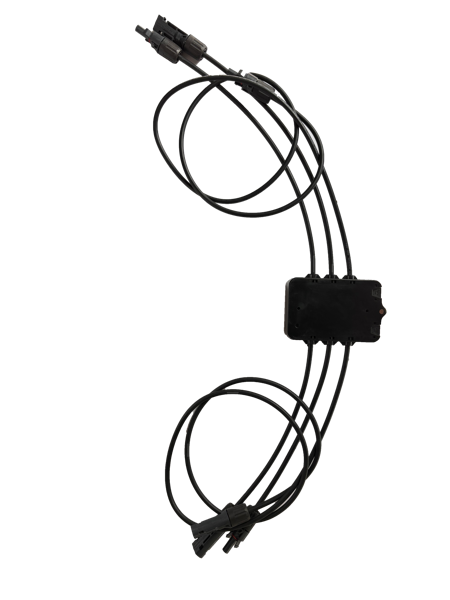
No outageThe device opens before work starts; other strings keep generating.
No cablingWireless design — no second conduit run, no extra penetrations.
IP68−40 to +85°C, covering tropical humidity through to cold climates.
PhasedBlock-by-block, each accepted and commissioned independently.
Real concerns
The hard part of retrofit is not the technology — it's the constraints
Four constraints on site
- No outage allowed: PPA terms and generation targets mean a lost day is lost revenue
- Missing drawings: incomplete as-built records mean wiring must be re-traced on site
- Ageing roof: metal sheeting and membranes will not survive another round of works
- Different standards: local fire codes and grid requirements differ from other markets and must be addressed item by item
How the design avoids them
- Wireless networking — no re-laying of communication cable along trays
- Terminals connect in parallel at the module output; string topology and inverters unchanged
- Clamped or screwed fixing leaves roof structure and membrane intact
- IEC 62109 / NEC 690.12 cross-reference documentation provided for local compliance work
Reference project
A factory rooftop plant, Southeast Asia
Tropical heat and humidity, unmanned operation, with data completeness holding steady through the climate cycle.
| Dimension | Detail |
|---|---|
| Customer type | Manufacturing factory with an owned rooftop plant |
| Region | Southeast Asia |
| Climate | Tropical, high humidity, concentrated wet season |
| Operation | Unmanned, remote monitoring as the primary mode |
| Key outcome | Data completeness does not vary with the climate cycle; IP68 protection and wide-temperature design validated on site |
Standards alignment
Different markets, different compliance anchors
| Market | Primary reference | How this solution maps |
|---|---|---|
| North America | NEC 690.12 (rapid shutdown) | Array-external voltage ≤1 V, far below the 80 V ceiling; response ≤25 s versus the mandated 30 s |
| EU / IEC system | IEC 62109-1, IEC 62548 | CE certification held; safety and grid-interface design aligned |
| Southeast Asia (Malaysia, Philippines and others) | MS IEC series, local fire regulations | IEC cross-reference documentation and fire-interlock integration designs available |
| China | YD/T 6334-2025 (LDSW), T/SESETA 000007—2026 (co-drafted) | In-house SOC and protocol backed by a national standard; co-drafter of the rapid-shutdown application specification |
Rollout
Phased delivery, every phase independently accepted
01 As-is surveyRe-trace string wiring and inverter models on site; reconstruct missing drawings.
02 Pilot blockOne or two blocks instrumented; measured link performance and shutdown behaviour, with a validation report.
03 Staged rolloutBlock-by-block with independent commissioning, no impact on other blocks' generation.
04 Central platformAll blocks onboarded to one cloud platform, forming a plant-wide safety ledger.
Next step
Tell us the plant's current state — we'll return a phased retrofit proposal
Installed capacity, years in service, inverter models and local compliance requirements. We return block partitioning, node calculation and phased investment guidance.